GRP Fiberglass Septic Tank Lifespan in UAE: What to Expect and How to Maximise It
Septic tanks in the UAE face conditions that would push any material to its limits. Summer temperatures exceeding 50 degrees Celsius, intense UV radiation, and the chemical composition of wastewater from desalination-fed households all affect how long a septic tank will last. For property owners, contractors, and facility managers across the country, understanding the real-world lifespan of GRP fiberglass septic tanks is essential for planning maintenance budgets and avoiding costly early replacements.
This guide covers how long GRP septic tanks actually last in UAE conditions, what factors reduce or extend that lifespan, and how to get the maximum service life from your installation.
What Is a GRP Fiberglass Septic Tank?
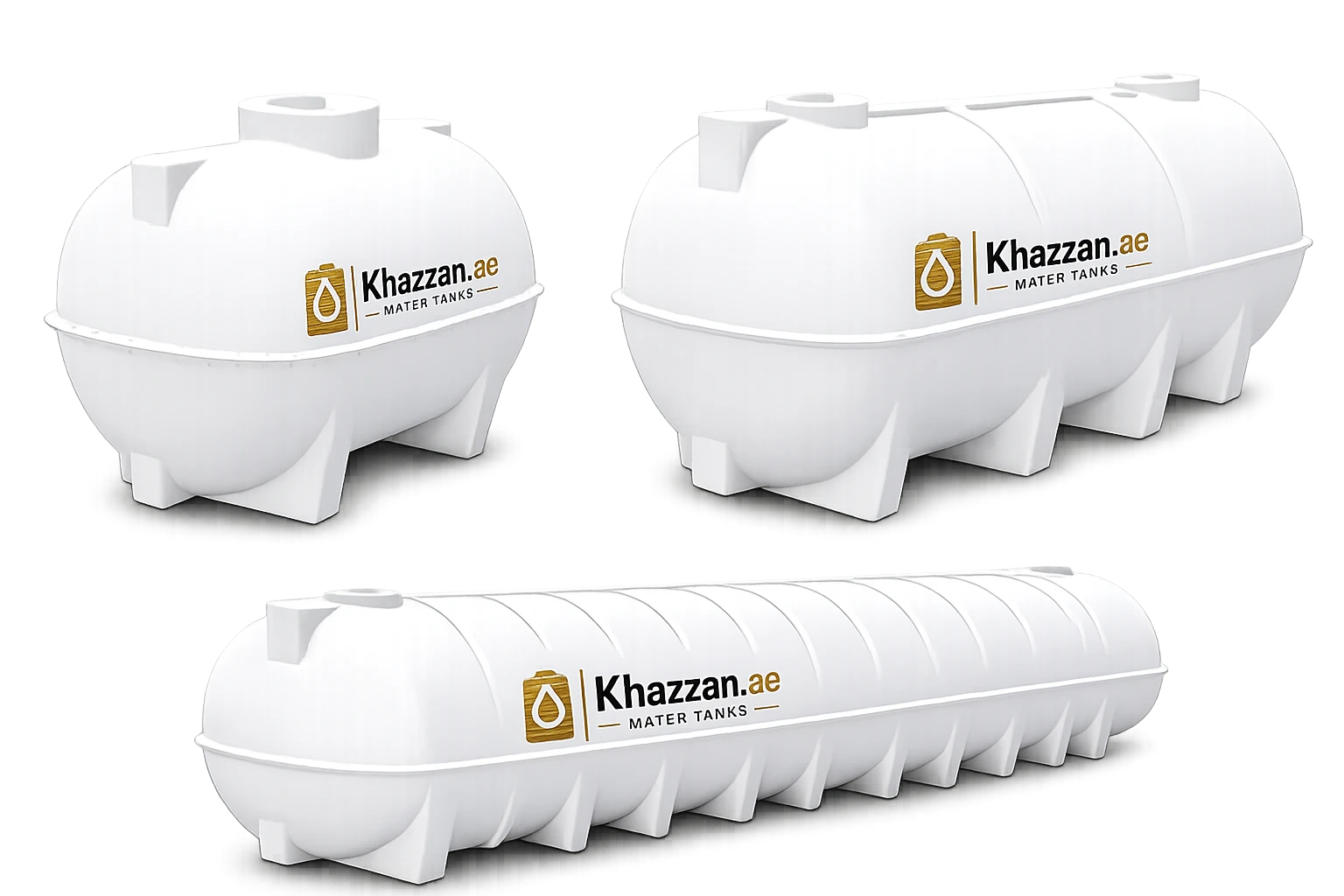
GRP stands for Glass Reinforced Plastic. The material combines a polyester or vinyl ester resin matrix with woven glass fibre reinforcement, creating a composite that is stronger than steel by weight, fully corrosion-resistant, and impervious to the biological activity inside a septic system. GRP septic tanks are manufactured using hand lay-up or filament winding processes and are available in a wide range of capacities from 300 US Gallons up to 20,000 US Gallons and beyond for custom installations.
Unlike polyethylene (plastic) tanks, which are produced as single-piece moulded units, GRP tanks are typically constructed in two halves or sections that are bonded together during manufacturing. This allows much larger sizes to be produced while maintaining structural integrity throughout the tank body.
Typical GRP Septic Tank Lifespan in the UAE
A properly installed and maintained GRP fiberglass septic tank in the UAE should last between 20 and 30 years. This figure assumes correct installation by a qualified contractor, appropriate sizing for the connected population, and compliance with routine maintenance schedules.
The actual lifespan varies depending on several site-specific and operational factors covered in detail below. Some installations in the UAE have operated for over 25 years without significant deterioration; others have required replacement within 10 to 12 years due to installation errors or operational abuse.
For comparison, GRP septic tanks consistently outlast concrete tanks in UAE conditions. Concrete is vulnerable to hydrogen sulphide attack from anaerobic decomposition inside the tank, which produces sulfuric acid and progressively corrodes the concrete structure. GRP is completely inert to this chemical process, giving it a clear durability advantage in septic applications.
Key Factors That Affect Lifespan
Installation Quality
The most significant factor in GRP septic tank longevity is how well the tank is installed. Key requirements include:
Correct bedding material: The tank must sit on a compacted sand or fine gravel bed of at least 150mm thickness. Hard objects, stones, or uneven surfaces beneath the tank create stress concentration points that can crack the GRP shell under the weight of the filled tank and surrounding soil.
Proper backfill: Backfill material around the tank must be granular and free of large stones. Backfill should be placed and compacted in layers to avoid uneven lateral pressure on the tank walls.
Inlet and outlet connections: Rigid pipework connected directly to the tank fittings without flexible couplings can transmit ground movement loads into the tank body. Flexible couplings at the connection points protect the GRP shell from stress cracking.
Traffic loading: GRP septic tanks not rated for vehicle traffic must never be installed in locations where vehicles can pass over them. Overloading collapses the tank structure regardless of material quality.
Tank Sizing
An undersized septic tank is one of the most common causes of early failure in UAE installations. When a tank is too small for the connected population, solids accumulate faster than they can decompose, the liquid level rises above design parameters, and both the tank structure and the outlet system are subjected to overload conditions.
The standard guidance for septic tank sizing in the UAE is based on the number of connected users and daily water consumption. For a 5-person household, a minimum 1,000 US Gallon tank is typically recommended. Labour camps and commercial properties require substantially larger systems calculated on daily flow rates.
Maintenance Frequency
Even a correctly sized and installed GRP septic tank requires periodic desludging. Solids accumulate at the bottom of the tank and must be pumped out before they reach a level that impairs the tank's separation function. In the UAE, desludging is typically required every 2 to 5 years depending on occupancy and tank size.
Tanks that are never desludged eventually fill with compacted solids, causing sewage to back up into connected drainage systems and placing the tank under conditions it was not designed to handle.
Chemical Inputs
Certain household and industrial chemicals are harmful to the biological activity inside a septic tank and can also attack the GRP material itself over extended exposure. Strong bleach used in excessive quantities, drain cleaning chemicals, and industrial solvents should not be discharged into a septic system.
KHAZAAN's GRP septic tanks use vinyl ester resin for the inner surface layer, which provides superior chemical resistance compared to standard polyester resin. This specification is particularly important for UAE installations where cleaning product use tends to be higher than in temperate climates.
Signs That a GRP Septic Tank Is Approaching End of Life
Property owners and maintenance teams should watch for these indicators:
Slow drainage from connected fixtures is often the first sign of a septic system problem, though it may indicate a blocked outlet rather than tank failure.
Sewage odours inside the property or near the tank location indicate that the tank is not functioning correctly.
Visible ground subsidence or soft ground above the tank location can indicate structural failure of the tank body.
Sewage surfacing at ground level around the tank outlet area indicates overloading or outlet blockage.
A professional inspection using CCTV or visual assessment through the access opening is the definitive way to assess the internal condition of the tank.
KHAZAAN GRP Septic Tank Specifications
KHAZAAN supplies UAE Municipality Certified GRP fiberglass septic tanks from 300 US Gallons to 20,000 US Gallons. All KHAZAAN septic tanks use food-grade vinyl ester resin for the inner surface with glass fibre reinforcement providing structural strength across the full tank body.
Key specifications: two-chamber or three-chamber configurations available for enhanced effluent quality; inlet, outlet, and vent connections supplied as standard; access risers and covers included; rated for soil burial to 1.5m cover depth on standard models; higher cover ratings available on request for traffic-loaded installations.
KHAZAAN provides a 2-year manufacturer warranty on all GRP septic tanks and supplies tanks across Dubai, Abu Dhabi, Sharjah, RAK, Fujairah, Ajman, and UAQ.
Frequently Asked Questions
How long does a GRP septic tank last in UAE?
A properly installed and maintained GRP fiberglass septic tank in UAE conditions has a design lifespan of 20 to 30 years. The actual service life depends on installation quality, tank sizing relative to the connected population, maintenance frequency, and the chemical content of the wastewater entering the system.
Does GRP last longer than concrete for septic tanks in UAE?
Yes. GRP fiberglass is chemically inert to hydrogen sulphide and sulfuric acid produced by anaerobic decomposition inside septic tanks. Concrete is vulnerable to these chemicals and typically shows significant deterioration within 10 to 15 years in active septic installations. GRP is the preferred material for long-life septic applications in UAE.
How often should a GRP septic tank be desludged in UAE?
For a typical residential property in UAE, desludging every 2 to 3 years is a reasonable baseline. Larger households or properties with high water use may require annual desludging. Your septic tank service provider can assess the sludge level during a routine inspection and advise on the appropriate interval for your specific installation.
Can GRP septic tanks be repaired if damaged?
Yes. Minor cracks and delamination in GRP septic tanks can be repaired by a qualified GRP repair technician. The damaged area is cleaned, ground back to sound material, and rebuilt using compatible resin and glass fibre reinforcement. For major structural damage, replacement is usually more cost-effective than repair.
What size septic tank do I need for a 5-bedroom villa in UAE?
For a 5-bedroom villa with up to 8 occupants in UAE, a 1,500 to 2,000 US Gallon GRP septic tank is generally recommended. Contact KHAZAAN on WhatsApp +971509583173 for a sizing calculation based on your specific property and occupancy.
Summary
GRP fiberglass septic tanks are the most durable option for septic applications in the UAE, offering a realistic service life of 20 to 30 years when correctly installed, appropriately sized, and maintained on schedule. The material's resistance to chemical attack, structural strength, and compatibility with UAE soil conditions make it the standard choice for new septic installations across the country.
KHAZAAN supplies UAE Municipality Certified GRP septic tanks with delivery across all seven emirates. Contact us on WhatsApp +971509583173 or visit khazaan.ae for specifications and pricing.