
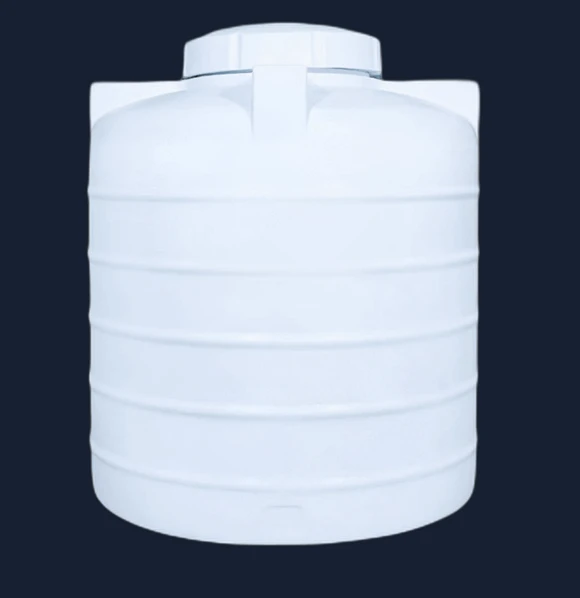
How to Calculate Water Tank Capacity: Litres & Gallons
To calculate water tank capacity, measure the inside of the tank, work out the volume in cubic metres, then multiply by 1,000 for litres.
This guide shows how to calculate the capacity of a water tank in litres and in gallons, how to measure the capacity of a tank you already own, and why the figure on the tank label is often a little lower than the figure you calculate. Every example is worked through so you can follow it with a tape measure and a calculator.
The Quick Answer: Capacity Formulas
Capacity is the volume of the tank. The formula depends on the shape.
| Tank shape | Volume formula | Result in |
|---|---|---|
| Vertical cylinder | 3.1416 × radius × radius × height | cubic units |
| Horizontal cylinder (full) | 3.1416 × radius × radius × length | cubic units |
| Rectangular or square | length × width × height | cubic units |
Use the same unit for every measurement. If you measure in metres, the answer is in cubic metres. If you measure in centimetres, the answer is in cubic centimetres. The radius is half the diameter.
Then convert to litres or gallons:
| Conversion | Value |
|---|---|
| 1 cubic metre | 1,000 litres |
| 1,000 cubic centimetres | 1 litre |
| 1 US gallon (USG) | 3.785 litres |
| 1 litre | 0.264 US gallons |
| 1 cubic metre | about 264 US gallons |
| 1 imperial gallon | 4.546 litres |
Step 1: Measure the Inside of the Tank
Measure the inside dimensions where you can. The outside of a tank is larger than the inside because of the wall thickness, so outside measurements overstate the capacity. For a plastic tank with thin walls the difference is small. For a thick GRP or panel tank it is larger.
For a cylinder you need two numbers: the diameter and the height (or length, if the tank lies on its side). For a box you need length, width and height. Measure the water height if you only want to know how much water is in the tank right now, and measure the full inside height if you want the full capacity.
How to Calculate the Capacity of a Vertical Cylindrical Tank
Take a vertical tank that is 92 cm across and 93 cm high. This is close to the size of a 150 USG vertical tank.
- Radius = 92 divided by 2 = 46 cm.
- Base area = 3.1416 × 46 × 46 = about 6,648 square centimetres.
- Volume = 6,648 × 93 = about 618,200 cubic centimetres.
- Litres = 618,200 divided by 1,000 = about 618 litres.
- US gallons = 618 divided by 3.785 = about 163 USG.
How to Calculate the Capacity of a Rectangular Tank
Take a tank that is 2.0 m long, 1.5 m wide and 1.2 m high.
- Volume = 2.0 × 1.5 × 1.2 = 3.6 cubic metres.
- Litres = 3.6 × 1,000 = 3,600 litres.
- US gallons = 3,600 divided by 3.785 = about 951 USG.
How to Calculate the Capacity of a Horizontal Cylindrical Tank
Take a horizontal tank that is 1.2 m in diameter and 2.0 m long.
- Radius = 0.6 m.
- Volume = 3.1416 × 0.6 × 0.6 × 2.0 = about 2.262 cubic metres.
- Litres = about 2,262 litres.
- US gallons = 2,262 divided by 3.785 = about 598 USG.
This is the capacity when the tank is completely full. Horizontal tanks are different when partly full, as the next section shows.
How Much Water Is in a Partly Filled Horizontal Tank?
In a vertical tank, half the height means half the water. In a horizontal cylinder it is not that simple, because the width of the water surface changes with depth. Use the depth of water divided by the diameter to read the fill level.
| Water depth as a share of diameter | Share of tank full | Litres in the 2,262 L example |
|---|---|---|
| 10% | 5% | about 118 |
| 25% | 20% | about 442 |
| 50% | 50% | about 1,131 |
| 75% | 80% | about 1,820 |
| 90% | 95% | about 2,144 |
A horizontal tank that looks a quarter full by depth is only about a fifth full by volume. Keep this in mind when you read a dipstick or a sight gauge.
Why the Tank Label Is Lower Than Your Calculation
If you calculate a 92 cm by 93 cm vertical tank, you get about 618 litres, but a 150 USG tank is rated at 568 litres. In this example the rated figure is about 92% of the geometric figure, and the exact gap differs from tank to tank. The gap is normal, and it comes from four things:
- Real tanks are not perfect cylinders. They have a domed or sloped lid, rounded shoulders and a moulded base.
- Wall thickness takes up space, so the inside is smaller than the outside.
- The float valve and overflow set the working water level a little below the top.
- Manufacturers rate the usable capacity, not the geometric maximum.
So use the formulas for a quick estimate, and use the rated capacity from the supplier when you buy. When you compare tanks, compare rated capacity to rated capacity.
How to Measure the Capacity of a Tank You Already Have
If there is no label and you do not trust the maths, measure by filling.
- Empty the tank and close the drain.
- Add water through a water meter, or count buckets of a known size. A 20 litre bucket filled 25 times is 500 litres.
- Stop at the level where the float valve closes or at the overflow.
- Add up the litres. That is the working capacity.
For a rough check, calculate the capacity with the formula and compare it with the fill test. The filled figure is usually a little lower than the calculated one, for the reasons above.
Litres, US Gallons and Imperial Gallons
Tanks in the UAE are usually sold in US gallons, written USG or US gallons, and many suppliers also give the litre figure. Do not confuse the US gallon with the imperial gallon. A US gallon is 3.785 litres, and an imperial gallon is 4.546 litres, so a 1,000 gallon tank is 3,785 litres in US gallons but 4,546 litres in imperial gallons. Always ask which gallon a quote uses.
| Tank size | Capacity in litres |
|---|---|
| 50 USG | about 189 L |
| 100 USG | about 378 L |
| 150 USG | about 568 L |
| 200 USG | about 757 L |
| 300 USG | about 1,136 L |
| 500 USG | about 1,893 L |
| 1,000 USG | about 3,785 L |
| 2,000 USG | about 7,571 L |
| 5,000 USG | about 18,927 L |
From Capacity to the Tank You Need
Knowing the capacity of a tank is half the job. The other half is how much water you use. A common planning figure is 175 litres per person per day. A household of six that wants two days of reserve needs 6 × 175 × 2 = 2,100 litres, or about 555 USG, so a 600 USG tank is the next size up.
Our water tank calculator does both jobs. It works out the volume for cylindrical, rectangular, horizontal and oval tanks, and it recommends a size from the number of people and the days of storage you want. For more on choosing, read our water tank sizes guide and guide to choosing the right tank capacity.
Common Mistakes When Calculating Tank Capacity
- Mixing units, for example a diameter in centimetres with a height in metres.
- Using the diameter instead of the radius in the formula.
- Measuring the outside of a thick-walled tank.
- Forgetting that the working level sits below the brim.
- Treating a horizontal tank as linear when it is partly full.
- Mixing up US and imperial gallons.
Frequently Asked Questions
Q: How do you calculate water tank capacity in litres? A: Measure the inside dimensions in metres, work out the volume in cubic metres (3.1416 × radius × radius × height for a vertical cylinder, or length × width × height for a box), then multiply by 1,000. For example, a tank with a volume of 3.6 cubic metres holds 3,600 litres.
Q: How do you calculate water tank capacity in gallons? A: Calculate the capacity in litres first, then divide by 3.785 to get US gallons. For example, 2,262 litres divided by 3.785 is about 598 US gallons. For imperial gallons, divide litres by 4.546.
Q: How do you measure the capacity of a tank you already own? A: Check the label or the supplier's specification first. If neither is available, fill the empty tank through a water meter or with buckets of a known size, and add up the litres until the float valve closes. Compare the result with a calculation from the dimensions.
Q: Why is my calculated capacity higher than the tank rating? A: The formulas assume a perfect shape and a full tank. Real tanks have domed lids, rounded shoulders and thick walls, and they work with the water level a little below the brim. The rated capacity is the usable figure, so it is normally lower than the geometric figure.
Q: How many litres is a 1,000 gallon water tank? A: A 1,000 US gallon tank holds about 3,785 litres. A 1,000 imperial gallon tank would hold about 4,546 litres, so check which gallon the supplier means.
Need help choosing a size? WhatsApp KHAZAAN on +971509583173 or email khazaanae@gmail.com with your numbers, or browse the full water tank range.