
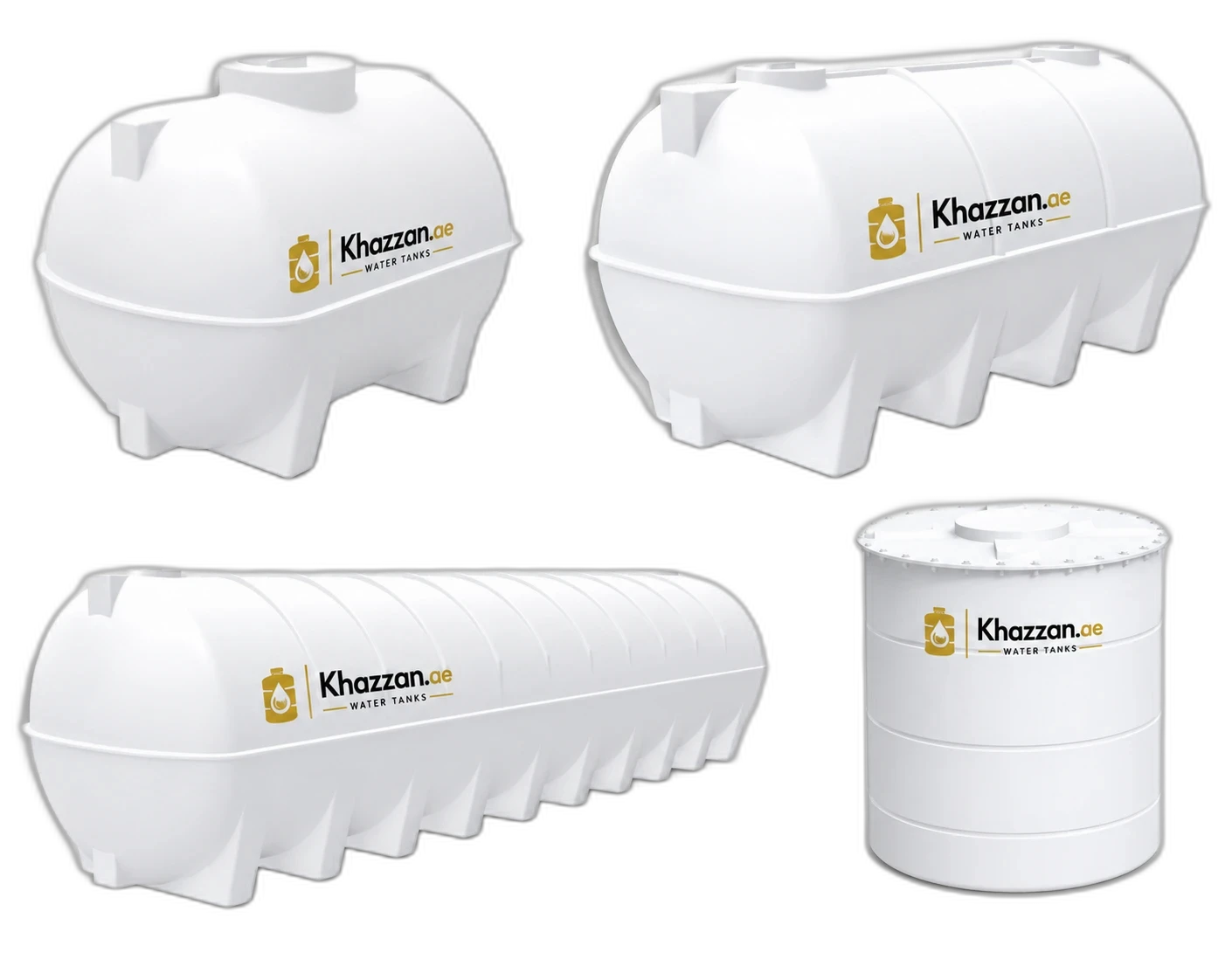
What Is a GRP Tank?
A GRP tank is a water storage tank made from Glass Reinforced Plastic, a composite of glass fibre and resin.
GRP stands for Glass Reinforced Plastic, also called fibreglass or fiberglass. Unlike a single-material tank such as steel or polyethylene, a GRP tank is a composite: layers of glass fibre reinforcement bound together with resin, cured into a rigid, watertight shell. This construction gives GRP tanks a combination of strength, corrosion resistance, and size flexibility that few other tank materials can match.
How a GRP Tank Is Made
Manufacturing starts with glass fibre, either as woven mat or chopped strand, which is laid into a mould and saturated with liquid resin. Once the resin cures, the glass fibre and resin form a single solid composite shell. Some GRP tanks are built as one piece in a factory and delivered whole. Others, called panel tanks, are built from individual flat GRP panels that are bolted together on site, allowing a tank to be assembled to almost any size regardless of factory or delivery constraints.
What Makes GRP Different From Other Tank Materials
Corrosion resistance. Unlike steel, GRP does not rust, and it needs no coating, cathodic protection, or repainting over its service life.
Strength to weight. GRP is stronger than steel by weight, which reduces the structural load a tank places on a rooftop or supporting frame compared to an equivalent-capacity steel or concrete tank.
Large capacity. Polyethylene tanks are practically limited to around 6,000 US Gallons as a single piece. GRP has no such ceiling. Factory-built GRP tanks reach 20,000 USG and beyond, and panel-assembled GRP tanks have no upper limit at all.
Food-grade water contact. The inner surface of a GRP tank is a smooth gel coat approved for potable water storage, the same standard required for drinking water tanks.
What Is a GRP Tank Used For?
GRP tanks are the standard choice wherever a property needs more storage than a polyethylene tank can provide, or where corrosion resistance and long service life justify the higher cost. Common applications include potable water storage for hotels, hospitals, and labour camps, dedicated fire fighting water reserves in commercial and industrial buildings, and bulk water storage for factories and infrastructure projects.
GRP Tank vs Other Tank Types
A GRP tank differs from a polyethylene (plastic) tank mainly in capacity and cost. Polyethylene is cheaper and sufficient for most residential needs up to 6,000 USG. GRP costs more but scales to far larger capacities and offers greater structural strength. See our full GRP vs polyethylene comparison for a detailed breakdown of when each material makes sense.
Frequently Asked Questions
Q: What is a GRP water tank? A: A GRP water tank is a water storage tank built from Glass Reinforced Plastic instead of steel, concrete, or polyethylene. It is the same material and construction as a GRP tank generally, the "water tank" label simply describes its use for potable water, fire fighting reserves, or bulk water storage rather than another liquid or material.
Q: What does GRP stand for in a water tank? A: GRP stands for Glass Reinforced Plastic, a composite material made from glass fibre reinforcement embedded in a polyester or vinyl ester resin. It is also known as fibreglass or fiberglass.
Q: What is the full form of GRP? A: The full form of GRP is Glass Reinforced Plastic. In some regions the same material is called FRP, Fibre Reinforced Plastic, or GFRP, Glass Fibre Reinforced Plastic. All of these terms describe the same glass fibre and resin composite.
Q: Is a GRP tank the same as a fiberglass tank? A: Yes. GRP, fibreglass, and fiberglass all refer to the same composite material: glass fibre reinforcement combined with resin.
Q: How big can a GRP tank be? A: Factory-built single-piece GRP tanks are available up to around 20,000 USG. GRP panel tanks, assembled on site from individual panels, have no practical upper size limit.
Q: Is a GRP tank safe for drinking water? A: Yes. GRP tanks intended for potable water use a food-grade gel coat inner surface approved for drinking water contact, and UAE Municipality Certified GRP tanks meet the required potable water storage standards.
Q: Is a GRP tank better than a plastic water tank? A: It depends on the requirement. GRP costs more but offers greater strength and virtually unlimited capacity, while polyethylene (plastic) tanks are more economical for residential use up to 6,000 USG. See our GRP vs polyethylene guide for the full comparison.
For GRP tanks in any capacity from 300 to 20,000 USG and beyond, WhatsApp +971509583173 or visit the GRP tank page. UAE Municipality Certified, delivered across all seven emirates.